VisionReward
📌 核心贡献
提出层次化多维度视觉偏好评估框架,将人类偏好分解为细粒度二值问题,通过可解释的线性加权学习偏好得分,并设计多维度偏好优化(MPO)策略确保 DPO 训练中各维度同步提升;在视频偏好预测上超越 VideoScore 17.2%。
📖 摘要
We present a framework for learning visual preferences in image and video generation. We employ a hierarchical visual assessment framework to capture fine-grained human preferences and utilize linear weighting for interpretable preference learning. VisionReward decomposes human preferences into multiple dimensions (5 for images, 9 for videos), each containing sub-dimensions (18 for images, 20 for videos), and creates 61-64 binary questions per modality. Through logistic regression on binary question outputs, VisionReward achieves transparent and interpretable preference scoring. We further propose Multi-dimensional Preference Optimization (MPO) to ensure consistent improvement across all dimensions during DPO training. VisionReward outperforms VideoScore by 17.2% in preference prediction accuracy and achieves 31.6% higher win rates for text-to-video models.
🔍 关键信息
| 字段 | 内容 |
|---|---|
| 机构 | Tsinghua University (THUDM) |
| 发表 | 2024-12-30 |
| 分类 | cs.CV |
| 链接 | arXiv |
📝 我的笔记
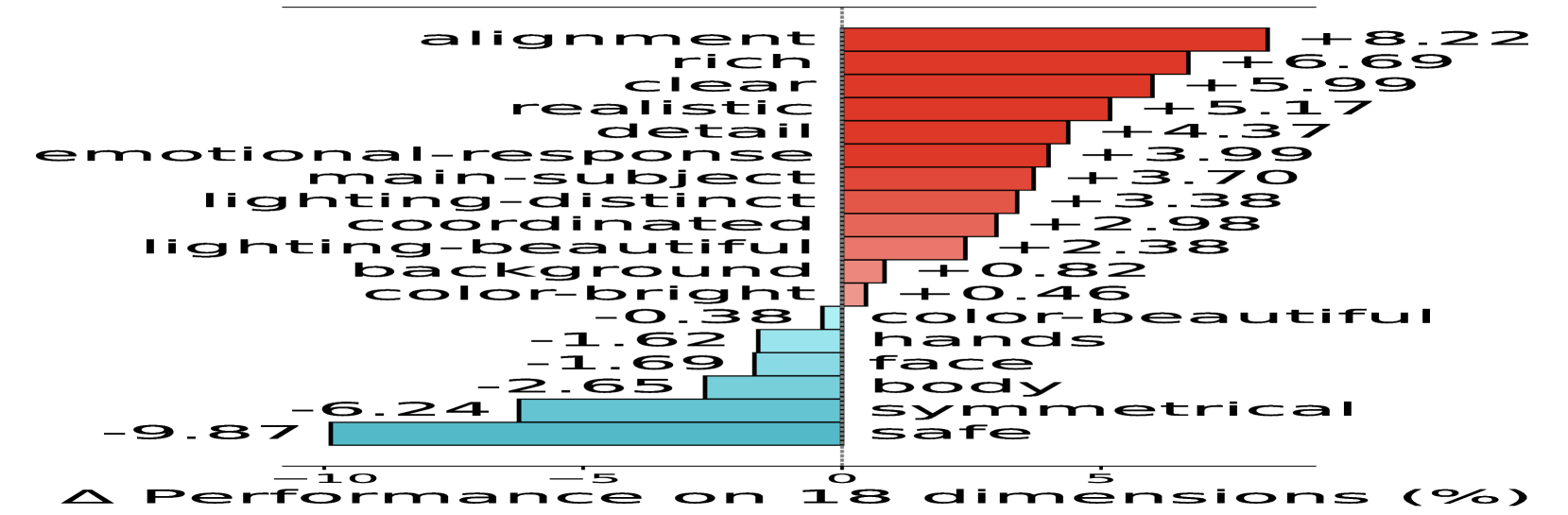
方法总览
核心问题/动机
现有视觉生成奖励模型存在两大问题:
- 黑箱不可解释:当前 RM 进行复杂偏好权衡但缺乏透明度,可能引入意外偏差
- 视频评估不足:图像 RM 基于帧级别评估,忽略视频的时序依赖;VideoScore 虽尝试视频评估,但偏好预测精度不够
方法
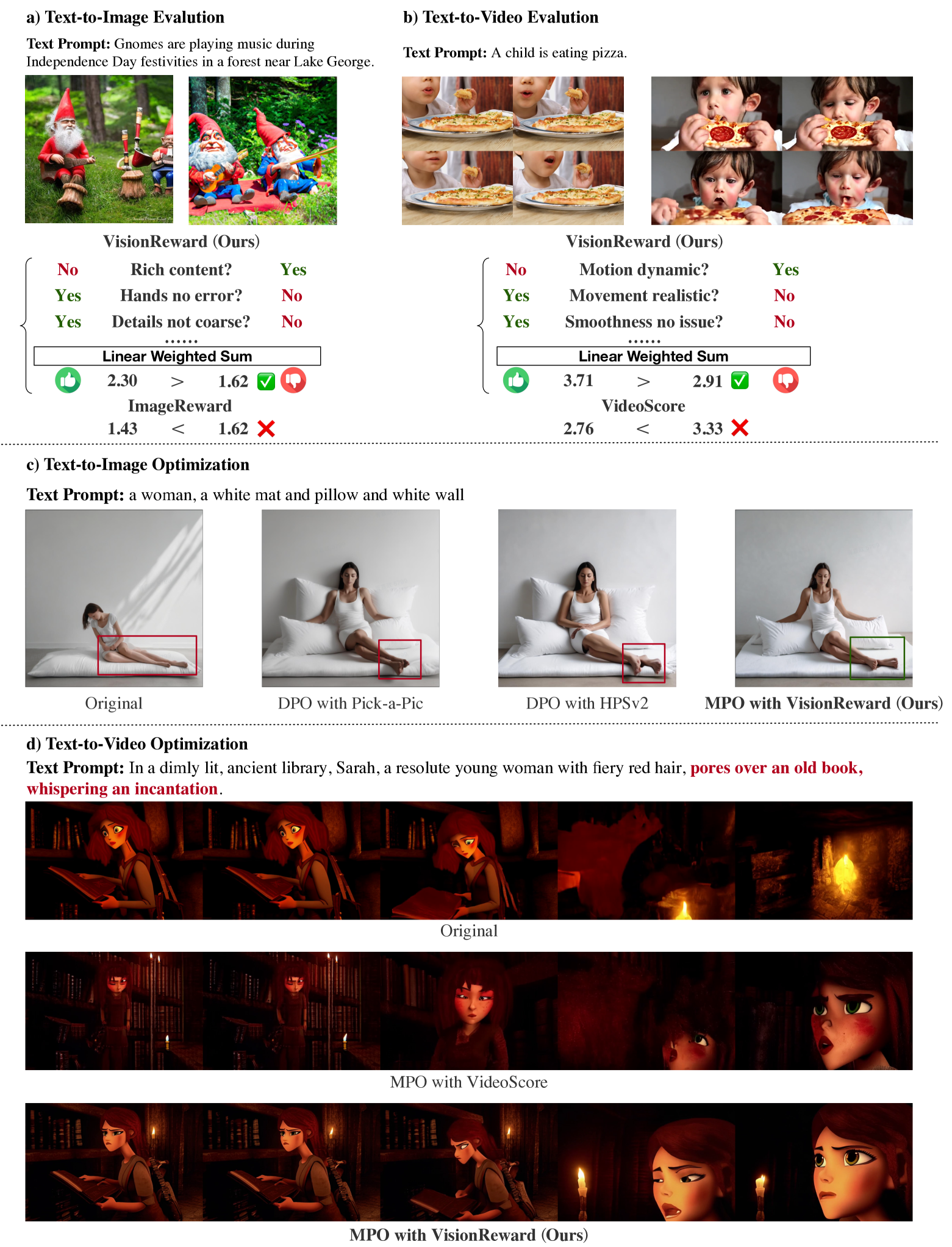
阶段一:细粒度视觉评估
将人类偏好层次化分解:
- 图像:5 个维度 → 18 个子维度 → 61 个二值问题
- 视频:9 个维度 → 20 个子维度 → 64 个二值问题
每个问题从渐进式选项转化为 yes/no 二值问答。在 CogVLM2(图像)/ CogVLM2-Video(视频)上微调,使用平衡的正负样本。
训练配置:batch size 64,学习率 1e-6(图像)/ 4e-6(视频),1500 步。
阶段二:可解释偏好学习
使用逻辑回归在二值问题输出上学习线性权重:
其中 是学习到的线性权重, 是二值问题回答。支持维度级别的子得分:
学习目标:
通过迭代权重掩码(Algorithm 1)确保所有权重为正相关。
阶段三:多维度偏好优化(MPO)
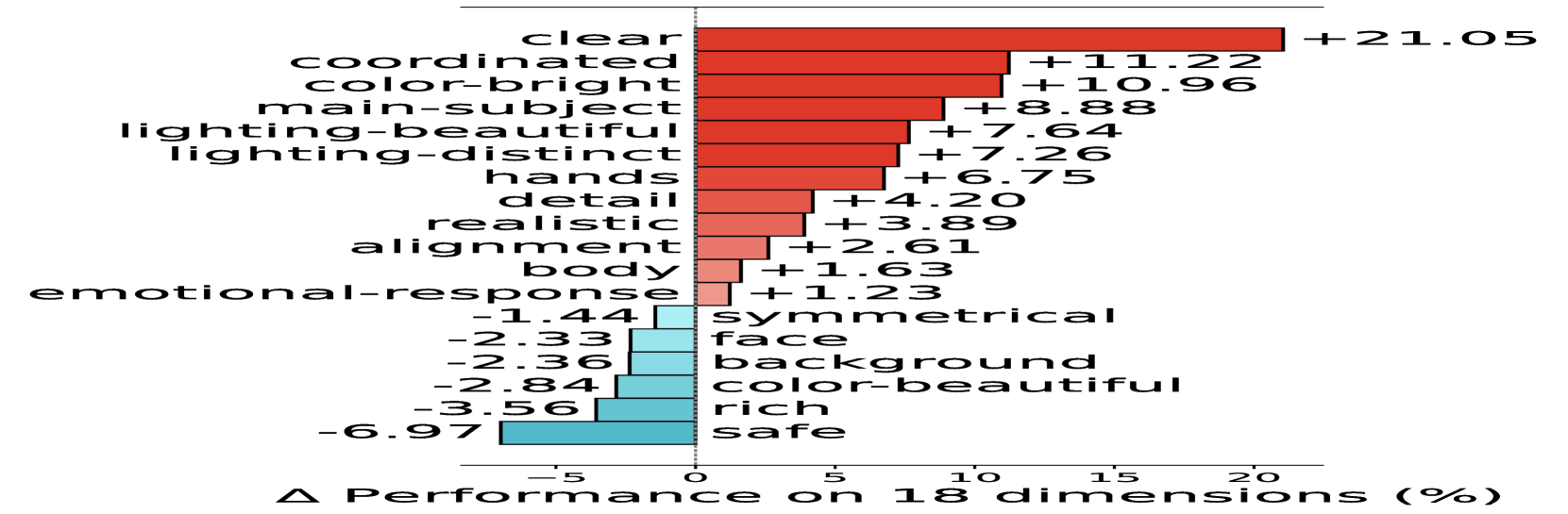
MPO 的核心约束:偏好对选择要求一个样本在所有维度上同时优于另一个(dominating),而非仅整体偏好更高。这避免了优化某一维度时牺牲其他维度。
关键结果
偏好预测精度
| 方法 | HPDv2 (τ) | MonetBench-Image (τ) | MonetBench-Video (τ) |
|---|---|---|---|
| ImageReward | 74.0 | 56.5 | 58.4 |
| HPSv2 | 83.3 | 55.6 | 62.5 |
| VideoScore | 76.8 | 52.5 | 54.9 |
| VisionReward | 81.7 | 59.5 | 72.1 |
MPO 策略有效性(CogVideoX-5B)
| 方法 | Alignment | Quality | Dynamic | Physics | Preservation | Overall |
|---|---|---|---|---|---|---|
| Original | 1.733 | 0.660 | 0.053 | 0.344 | 0.653 | 4.303 |
| DPO | 1.697 | 0.680 | 0.034 | 0.356 | 0.741 | 4.515 |
| DPO w/ MPO | 1.766 | 0.688 | 0.042 | 0.356 | 0.721 | 4.573 |
MPO 相比普通 DPO 提升 +27.4%,将更多偏好对转化为 dominating pairs(+31.8%)。
Ablation
- 问题规模:偏好预测精度随问题数量增加显著提升
- 训练集大小:4K 样本后精度趋于稳定(200→4K:77.6→81.3)
- MPO 粒度:维度级别定义最优(dimension > sub-dimension > question level)
总结
VisionReward 的核心优势在于可解释性:通过线性加权将黑箱评分分解为可追溯的多维度贡献。MPO 策略有效避免了 DPO 训练中的维度间 trade-off 问题。但线性假设可能限制了对复杂偏好交互的建模能力。
🔗 相关论文
基于/改进自: ImageReward
同方向: VideoScore, VideoAlign, RewardDance