IXC-2.5-Reward
📌 核心贡献
提出 IXC-2.5-Reward,一个基于 InternLM-XComposer2.5 的通用多模态奖励模型(ACL 2025),通过构建覆盖文本、图像、视频的高质量多模态偏好数据集,在 VL-RewardBench 上以 70.0% 超越 GPT-4o(62.4%)和 Gemini-1.5-Pro(62.5%),并展示了 RL 训练、test-time scaling 和数据清洗三大应用场景。
📖 摘要
Despite the promising performance of Large Vision Language Models (LVLMs) in visual understanding, they occasionally generate incorrect outputs. While reward models (RMs) with reinforcement learning or test-time scaling offer the potential for improving generation quality, a critical gap remains: publicly available multi-modal RMs for LVLMs are scarce, and the implementation details of proprietary models are often unclear. We bridge this gap with InternLM-XComposer2.5-Reward (IXC-2.5-Reward), a simple yet effective multi-modal reward model that aligns LVLMs with human preferences. To ensure the robustness and versatility of IXC-2.5-Reward, we set up a high-quality multi-modal preference corpus spanning text, image, and video inputs across diverse domains, such as instruction following, general understanding, text-rich documents, mathematical reasoning, and video understanding. IXC-2.5-Reward achieves excellent results on the latest multi-modal reward model benchmark and shows competitive performance on text-only reward model benchmarks. We further demonstrate three key applications of IXC-2.5-Reward: (1) Providing a supervisory signal for RL training. We integrate IXC-2.5-Reward with Proximal Policy Optimization (PPO) yields IXC-2.5-Chat, which shows consistent improvements in instruction following and multi-modal open-ended dialogue; (2) Selecting the best response from candidate responses for test-time scaling; and (3) Filtering outlier or noisy samples from existing image and video instruction tuning training data. To ensure reproducibility and facilitate further research, we have open-sourced all model weights and training recipes.
🔍 关键信息
| 字段 | 内容 |
|---|---|
| 机构 | Shanghai AI Laboratory |
| 发表 | 2025-01-21 (ACL 2025) |
| 分类 | cs.CV, cs.CL |
| 链接 | arXiv |
📝 我的笔记
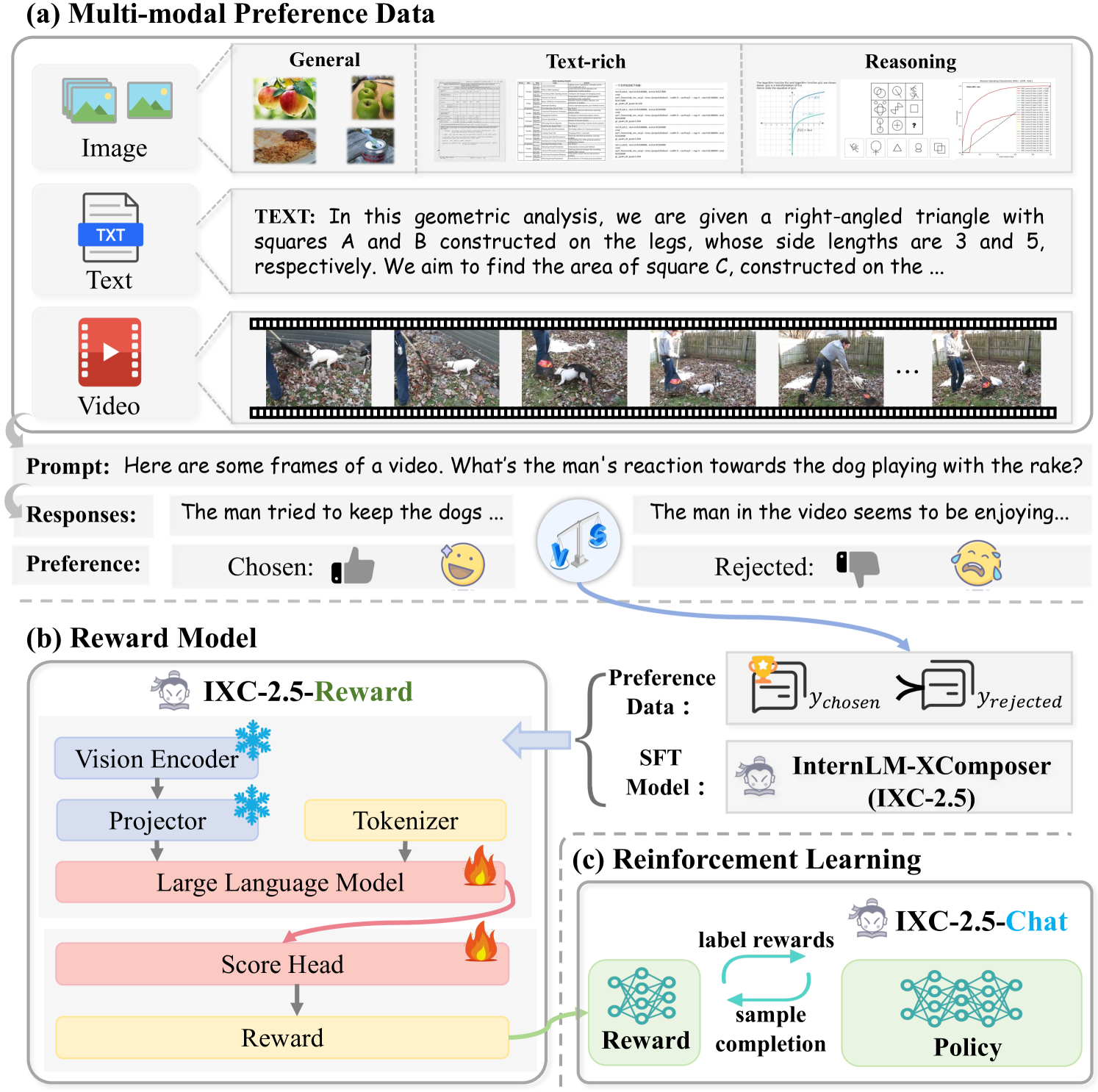
方法总览
核心问题/动机
公开可用的多模态奖励模型极其稀缺,且商业模型(如 GPT-4o 作为 judge)的实现细节不透明。现有 RM 大多局限于纯文本或单一视觉模态,缺乏一个同时支持 text + image + video 的通用 RM。论文旨在填补这一空白,提供一个简单而有效的开源方案。
方法
1. 模型架构
基于 InternLM-XComposer2.5(IXC-2.5),进行以下改造:
- 冻结视觉编码器和 MLP 投影层(保留预训练权重)
- 训练 LLM 部分 + 新增的 score head
- Score head 将所有 token 的平均隐状态特征映射为标量奖励值
2. 训练损失
采用 Bradley-Terry 偏好损失:
其中 为 chosen response, 为 rejected response, 为 sigmoid 函数。
3. 多模态偏好数据集
构建覆盖多领域的偏好数据,分为已有数据集和新采集数据:
已有数据集:
| 模态 | 数据集 |
|---|---|
| Text | UltraFeedback, Tulu-3-IF, safety datasets |
| Image | WildVision-Battle, LLaVA-Critic, VL-Feedback |
| Video | TrafficQA, FunQA, MiraData |
新采集数据:
| 类型 | 内容 |
|---|---|
| 图像-通用 | 通用指令跟随 |
| 图像-文本密集 | 文档、图表理解 |
| 图像-推理 | 几何、数学推理 |
| 视频-通用 | 多领域视频理解 |
Rejected response 生成策略:SFT 模型生成多个输出,通用和文本密集数据用 GPT-4o pairwise 评估选择较差回答,数学/指令跟随数据用验证函数与 ground truth 对比。
4. 长度约束
论文发现 LLM-as-judge 的长度偏差问题在多模态 RM 中同样严重。移除长度约束后 benchmark 分数提升(WildVision 74.6% → 76.2%),但生成长度显著增加(274 → 361 tokens),为用户体验选择保留约束。
5. 三大应用场景
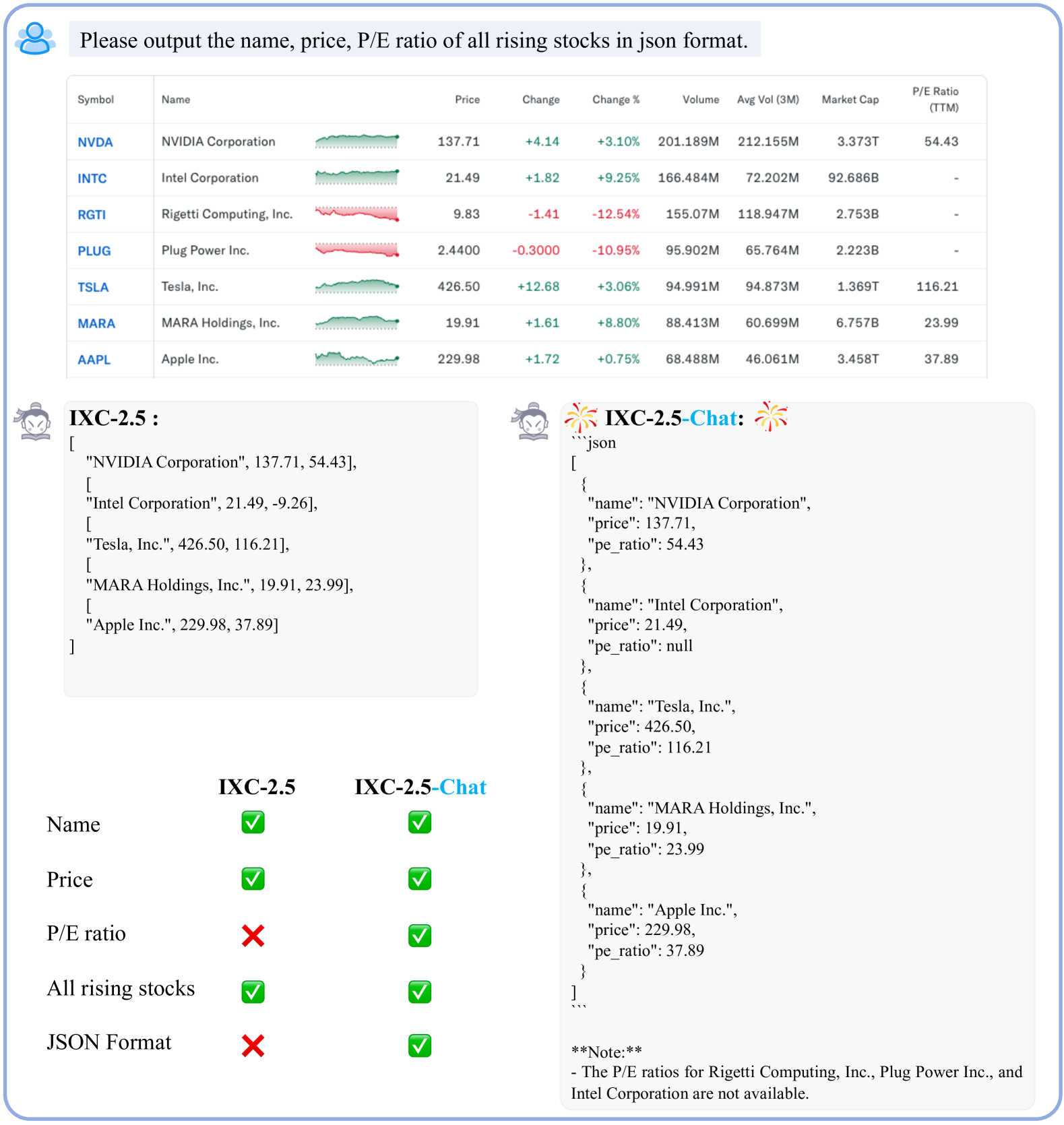
应用 1:PPO 强化学习训练
以 IXC-2.5-Reward 作为奖励信号,采用 PPO 训练 IXC-2.5-Chat:
- 优势估计:
- 策略梯度:
- 超参数:, ,
应用 2:Test-Time Scaling (Best-of-N)
生成 N 个候选回答(不同 seed),用 RM 打分选最优。Best-of-4 即可在几乎不增加长度(274 → 283 tokens)的情况下将 WildVision 从 74.6% 提升至 77.7%。
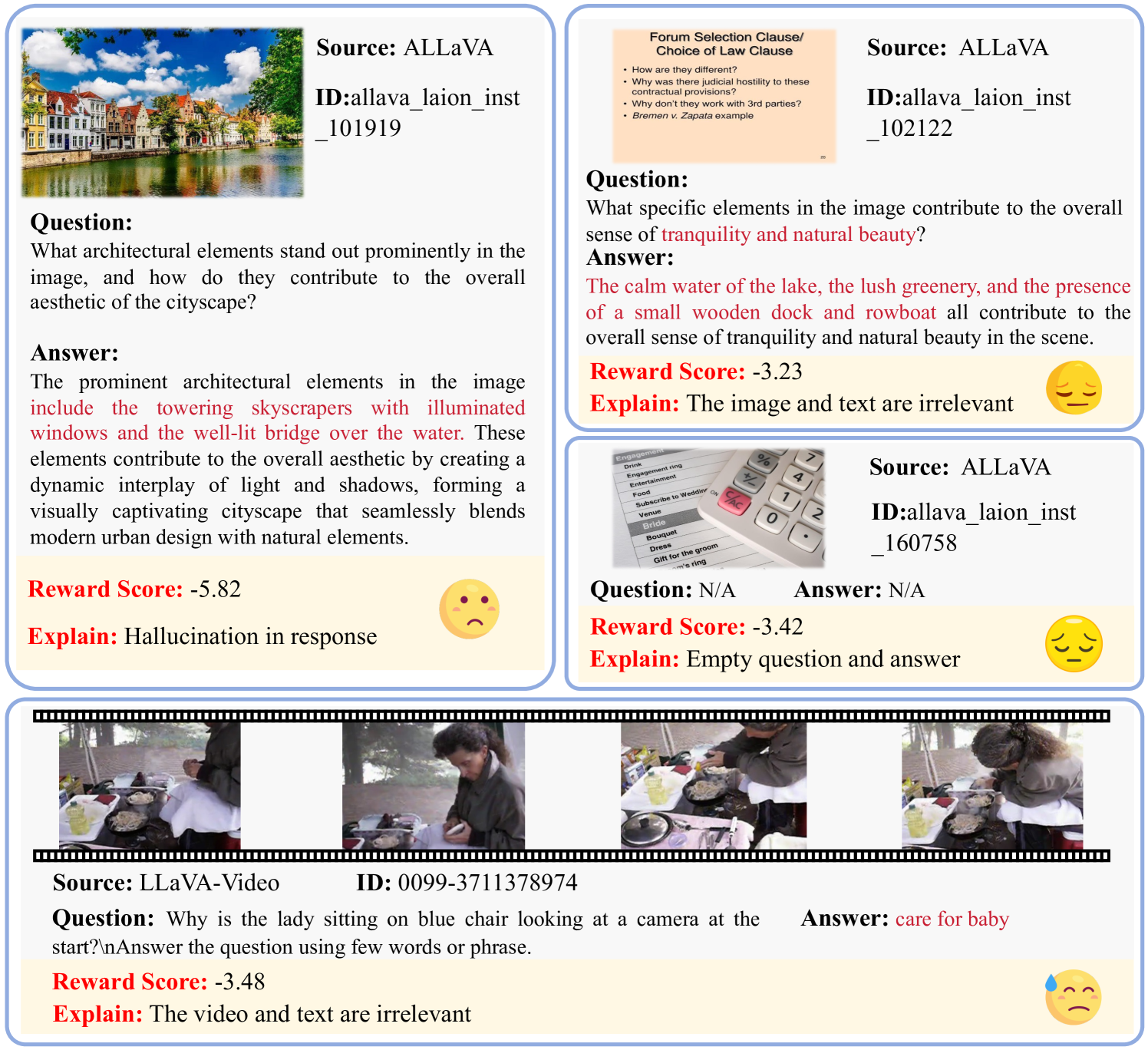
应用 3:数据清洗
用 RM 分数检测训练数据中的异常样本(幻觉、空答案、内容不匹配),低分样本高度关联低质量数据。
关键结果
VL-RewardBench(多模态 RM 基准)
| 模型 | 参数量 | Macro Acc | Overall |
|---|---|---|---|
| GPT-4o | — | 62.4% | — |
| Gemini-1.5-Pro | — | 62.5% | — |
| IXC-2.5-Reward | 7B | 70.0% | 65.8% |
Reward-Bench(纯文本 RM 基准)
| 模型 | Average |
|---|---|
| INF-ORM-Llama3.1-70B | 95.1% |
| IXC-2.5-Reward (7B) | 88.6% |
以 7B 参数量在纯文本基准上取得具有竞争力的表现。
RM-Bench
| 模型 | Average (Easy/Normal/Hard) |
|---|---|
| IXC-2.5-Reward | 68.8% |
PPO 训练后的 IXC-2.5-Chat 效果
| 指标 | IXC-2.5-Chat (PPO) | 之前 SOTA |
|---|---|---|
| WildVision | 74.6% | 67.3% |
| MIA | 84.0% | 80.7% |
| MM-MT | 5.70 | 5.45 |
Test-Time Scaling (Best-of-N)
| 方法 | Avg Tokens | WildVision |
|---|---|---|
| IXC-2.5-Chat | 274 | 74.6% |
| Best-of-4 | 283 | 77.7% |
Best-of-N 的增益来自质量而非长度,验证了 RM 评分的有效性。
Ablation: 长度约束的影响
| 设置 | Avg Tokens | WildVision |
|---|---|---|
| 有长度约束 | 274 | 74.6% |
| 无长度约束 | 361 | 76.2% |
移除约束提升 benchmark 分数但导致过长输出,说明 benchmark 分数与用户体验间存在 trade-off。
总结
IXC-2.5-Reward 以简洁的设计(冻结视觉编码器 + 训练 LLM + score head)和精心构建的多模态偏好数据集,实现了 7B 参数量下超越 GPT-4o 和 Gemini-1.5-Pro 的 RM 性能。论文的核心价值在于:(1) 证明了开源多模态 RM 可以超越闭源模型;(2) 展示了 RM 在 PPO 训练、test-time scaling 和数据清洗三个场景的实用性;(3) 揭示了长度偏差在多模态 RM 中的重要性。作为开源工作,完整公开了权重和训练配方,具有很好的可复现性。
🔗 相关论文
基于/改进自: InternLM-XComposer2.5
同方向: UnifiedReward, LLaVA-Critic